 Featured work
WeKruit
{ 2025 / 07 }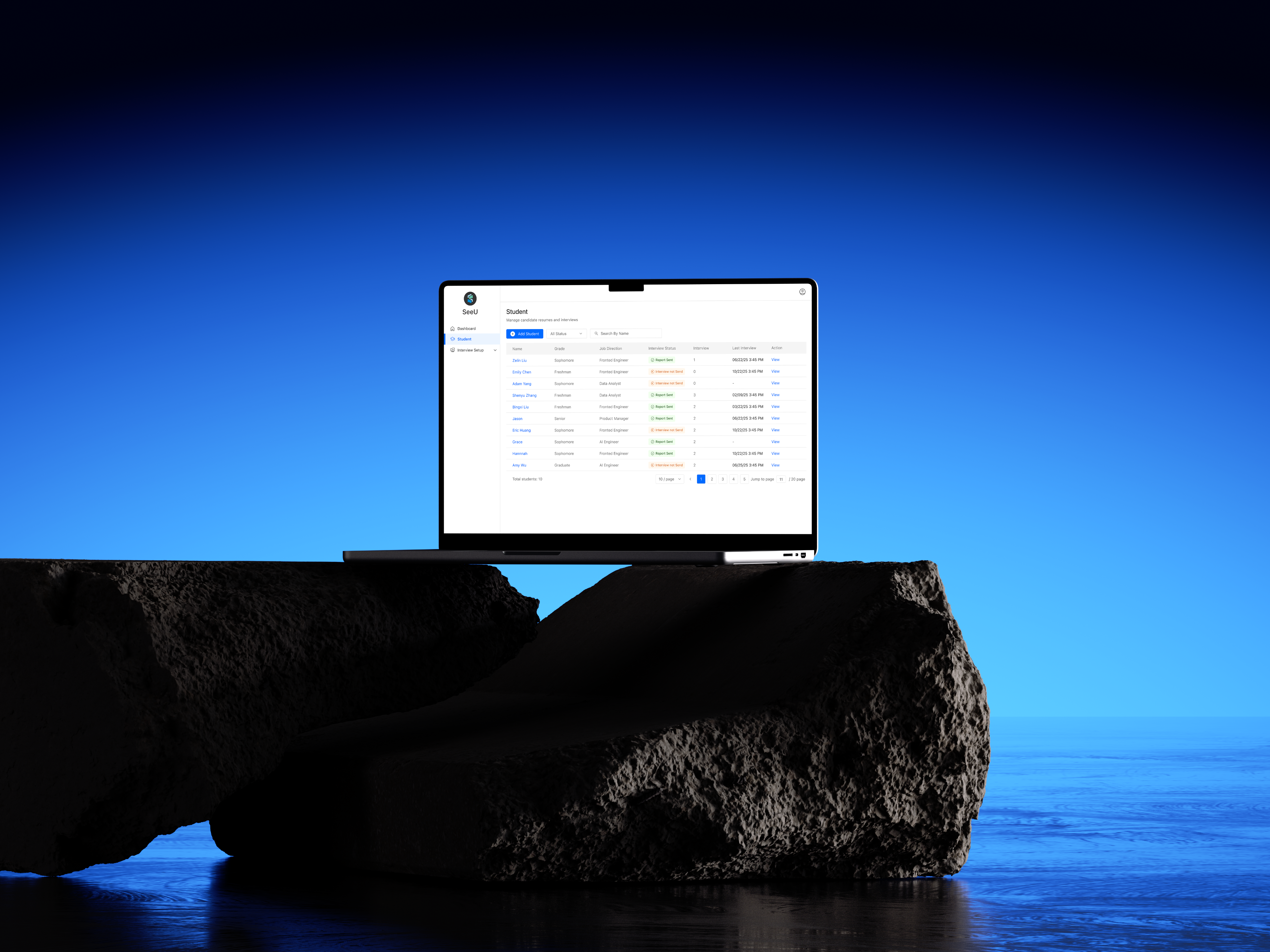


WeKruit
- Main Role
- Design Lead / UX Designer
- Date
- 2025 Summer
- Duration
- 1 month

AI-Powered
0 - 1
Product Thinking
UX Strategy
Main role
Design Lead /
UX Designer
Date
2025 Summer
Duration
1
months

What is WeKruit
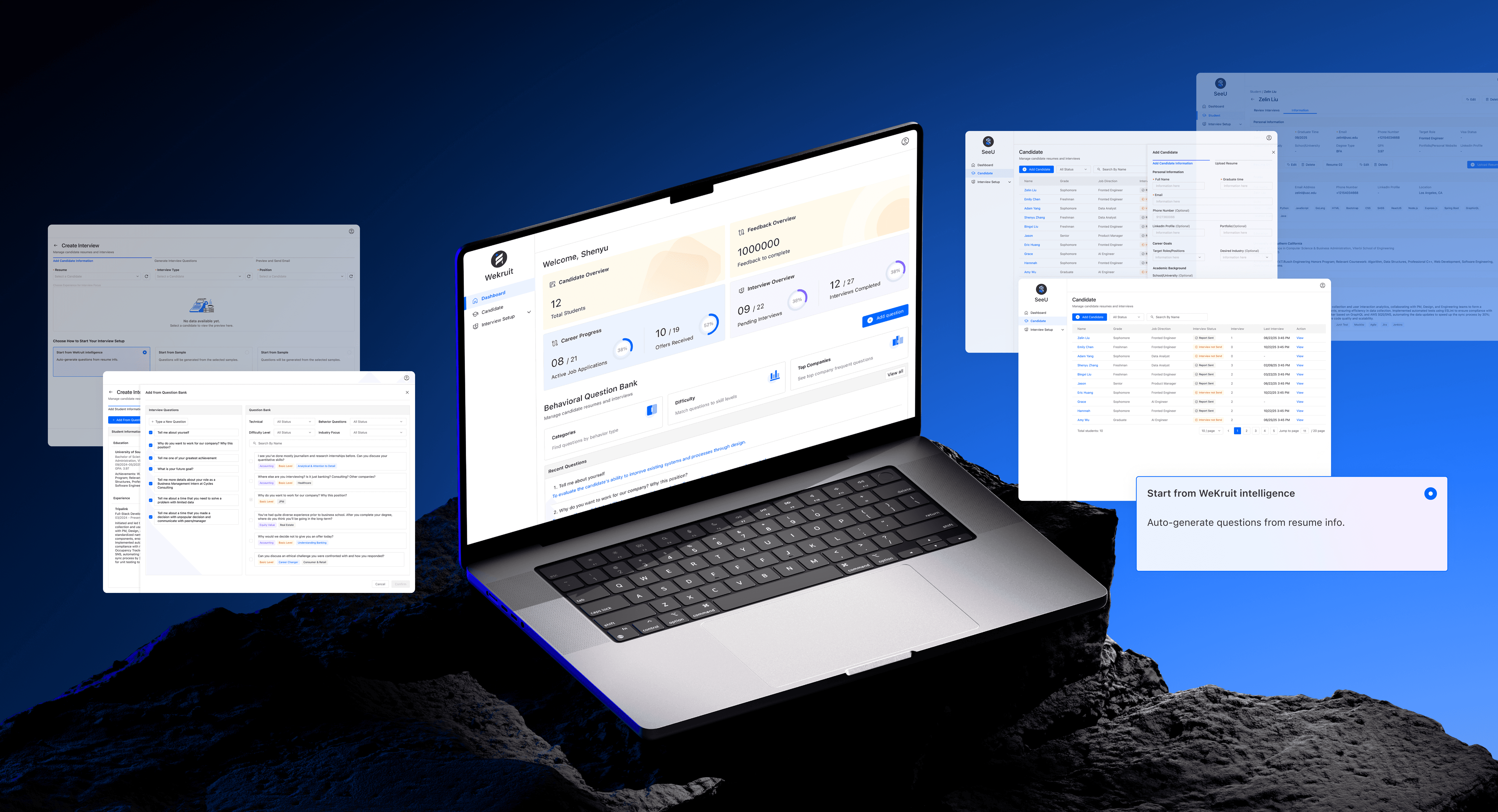
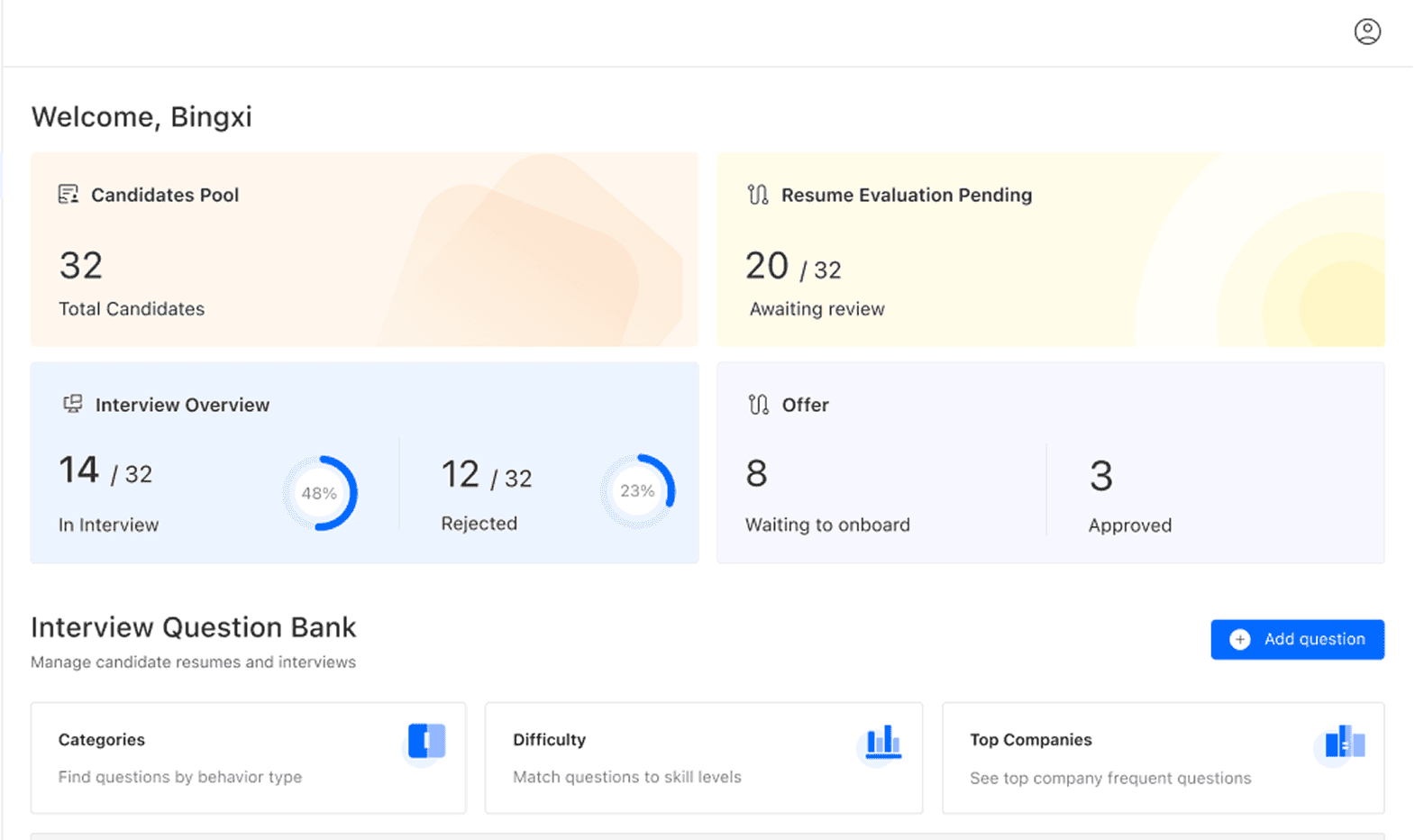
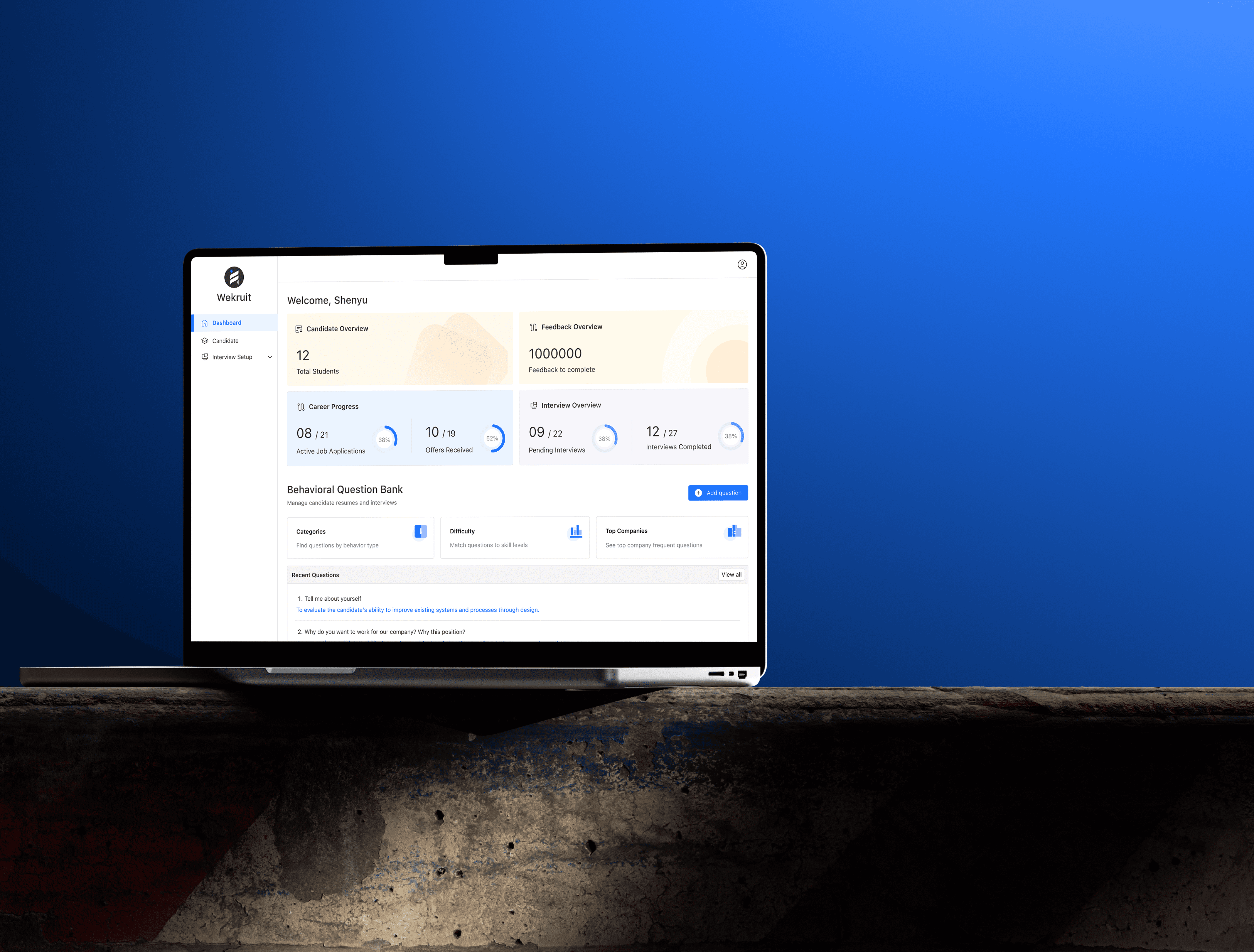
Manual, fragmented workflows made managing candidate interviews complex and time-consuming, so the product aim to centralize candidate management, task creation, AI-driven question generation, and evaluation tracking.
We delivered an MVP that validated corporate needs and provided a scalable foundation through extensible product architecture and a reusable design system. Through 2 rounds of iteration and 20+ user feedback inputs, I delivered 40+ design assets that raised the product’s usability satisfaction to 7/10 (up to Sept).
Team & Role
Designer
2
Product
2
Developer
7
As Design Lead, I collaborated with a design partner to define the design direction, split ownership of features, and ensure alignment through regular critiques—balancing leadership with hands-on delivery.
Beyond design execution, I collaborated with PMs, and developers to translate requirements into design, balance trade-offs, and align cross-functional goals while ensuring user-centricity.
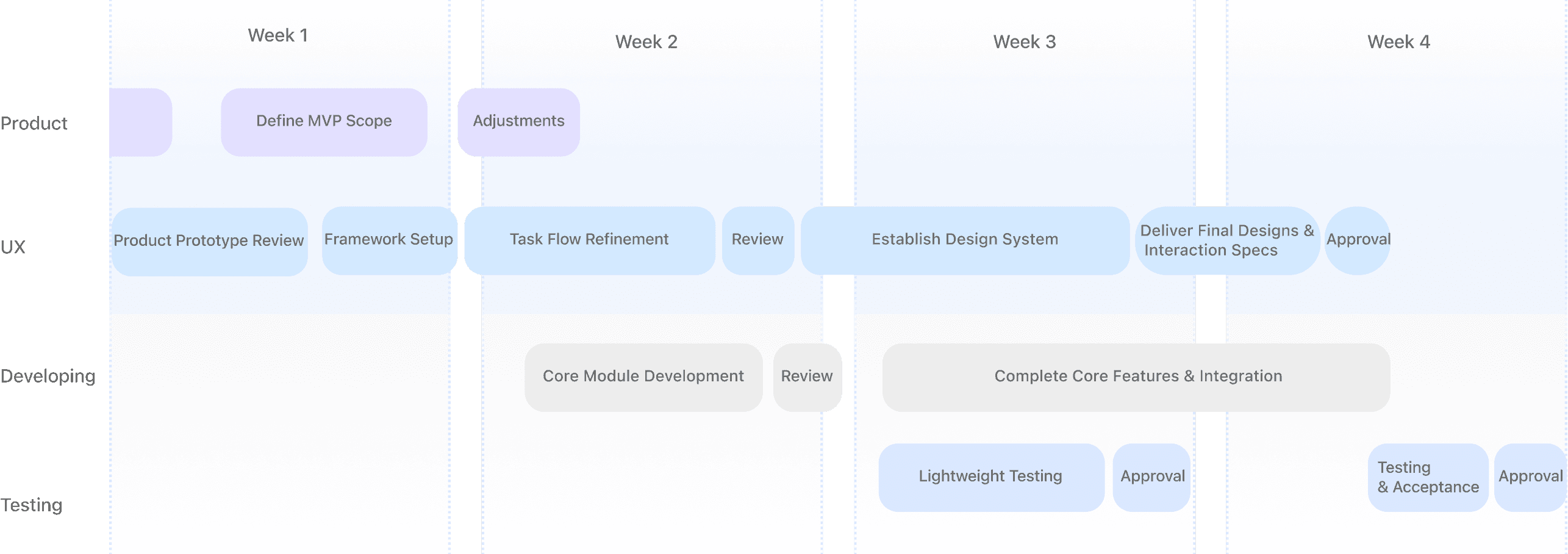
Timeline


01
Faster Hiring Pipeline
Streamline the recruitment journey to complete the process more efficiently.
02
Smarter Candidate Matching
Deliver more tailored support to help companies identify the right candidates with precision.
03
Better Resume Management
Enable easier tracking and handling of multiple applications at once.
Design Files
Iterations
Response questionnaire
(up to Sep)
Usability Satisfaction
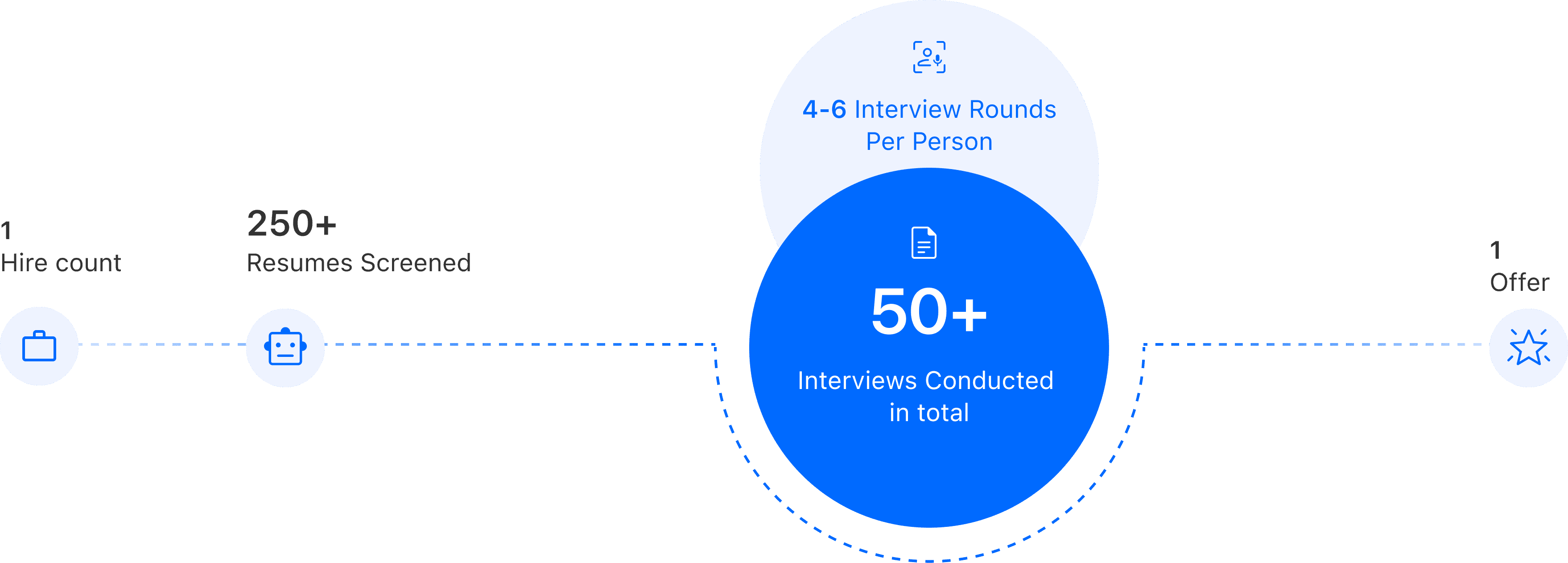
The Reality of Hiring Today
Recruitment requires screening hundreds of resumes and conducting dozens of interviews, yet results in only a single hire — revealing the inefficiency and high cost of the process.
Competitive Analysis
Benchmarking 6 leading solutions to identify gaps in interview execution, ATS workflows, and AI adoption. Comparing products to uncover fragmented user experiences and unmet enterprise needs.
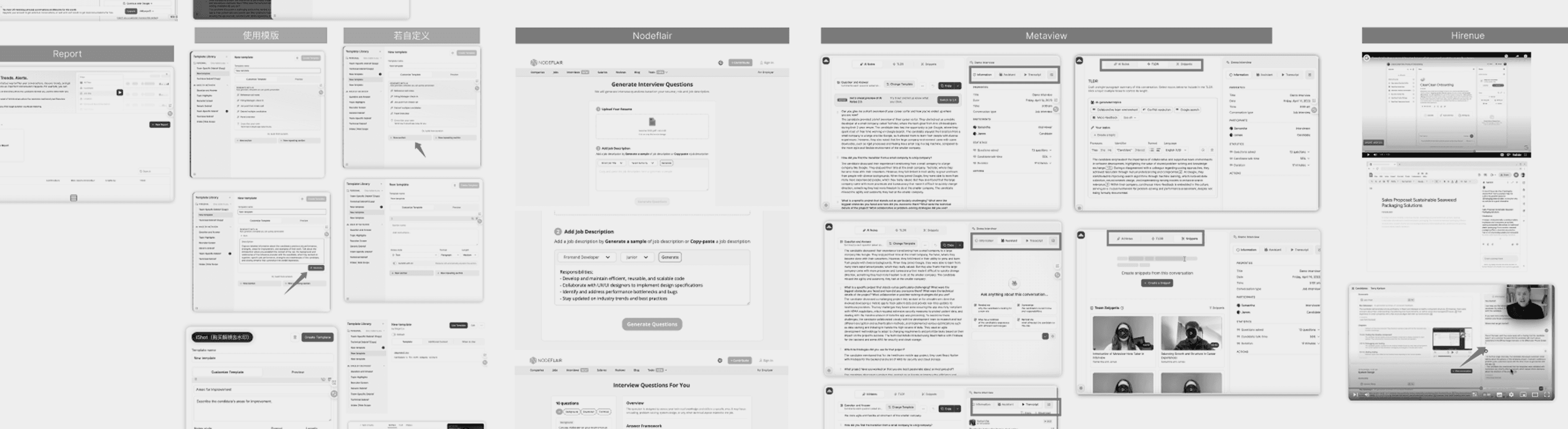
6
products
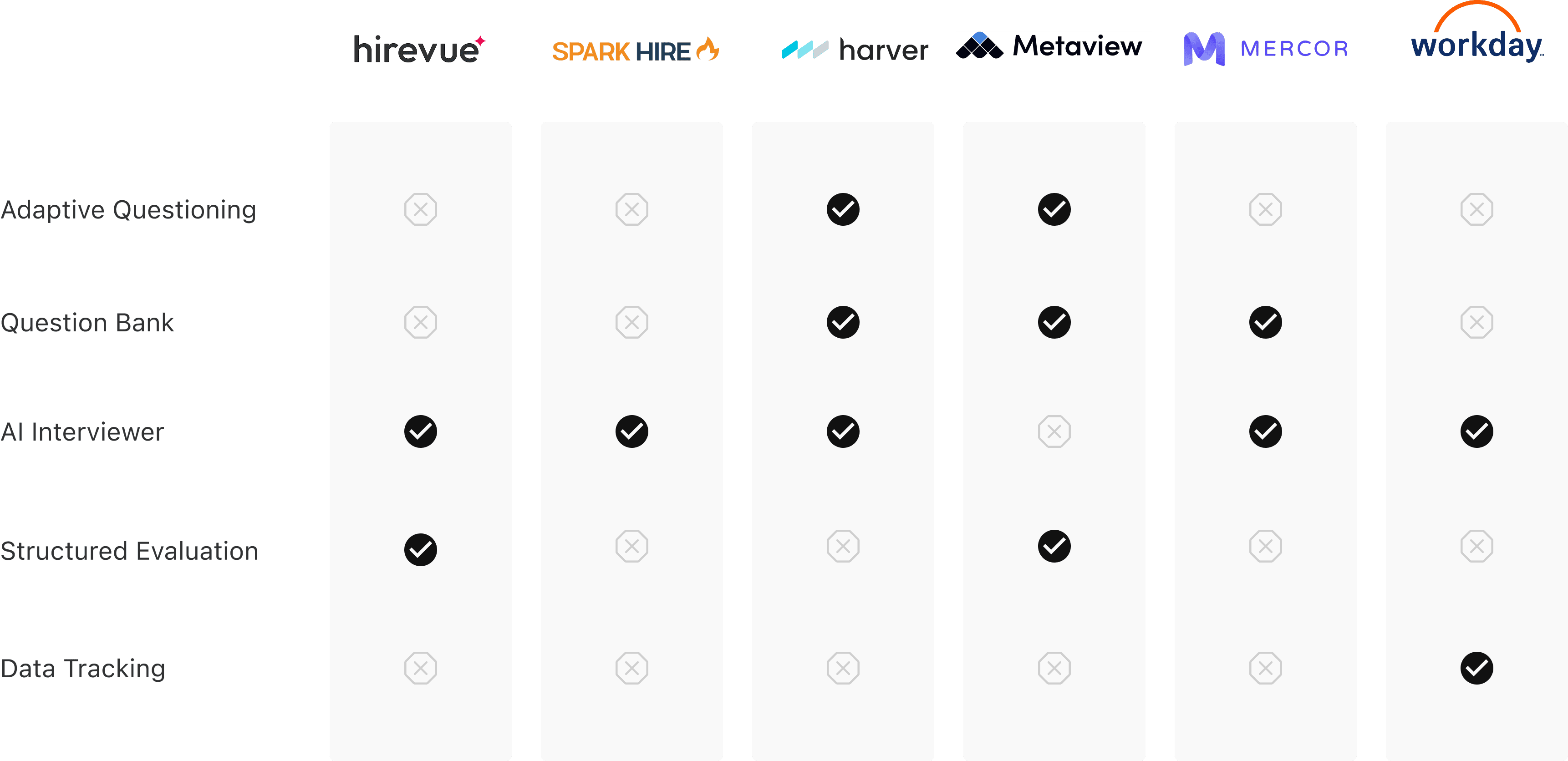
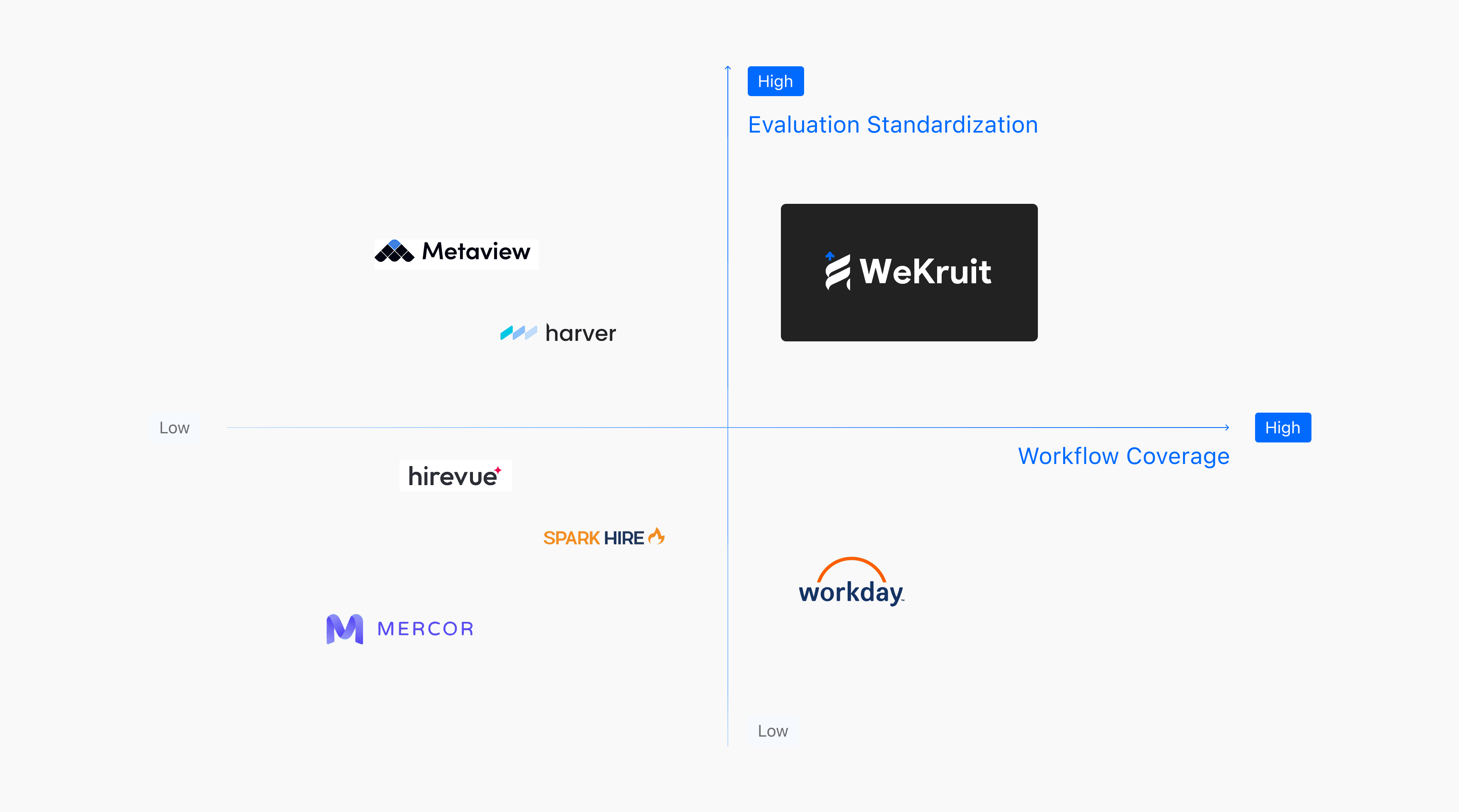
Existing solutions are either heavily interview-execution focused (e.g., SparkHire) or mainly ATS-driven (e.g., Greenhouse, Workday). As a result, tracking and feedback remain fragmented, forcing HR teams to manually stitch data across Excel or BI tools.
Around 70% of market players claim to use AI, but most apply it in narrow, isolated ways — such as scoring or video analysis — rather than across the end-to-end hiring process.
Enterprise pain points are not clearly addressed, leaving internal HR challenges unresolved and solutions misaligned with real organizational needs.
2x2 Matrix / Market Positioning Matrix
We compared market solutions across two key dimensions: Workflow Coverage and Evaluation Standardization . Using these dimensions, we built a 2×2 analysis to highlight gaps and opportunities.
Design Opportunities
The current hiring process is inefficient and costly, often requiring hundreds of resumes and dozens of interviews for a single hire. Existing solutions leave workflows fragmented across ATS, interviews, and feedback, while most competitors’ AI applications remain limited to narrow, isolated tasks. This gap creates a clear opportunity to design an integrated, end-to-end platform that delivers adaptive questioning, structured evaluation, and standardized feedback—directly addressing enterprise pain points and improving efficiency, consistency, and decision-making in recruitment.
Current Interview Journey Mapping
To dive deeper, we carefully reviewed and evaluated current solution to identify gaps, requiring frequent tool switching and close coordination between two key roles, which leads to inefficiencies and friction.
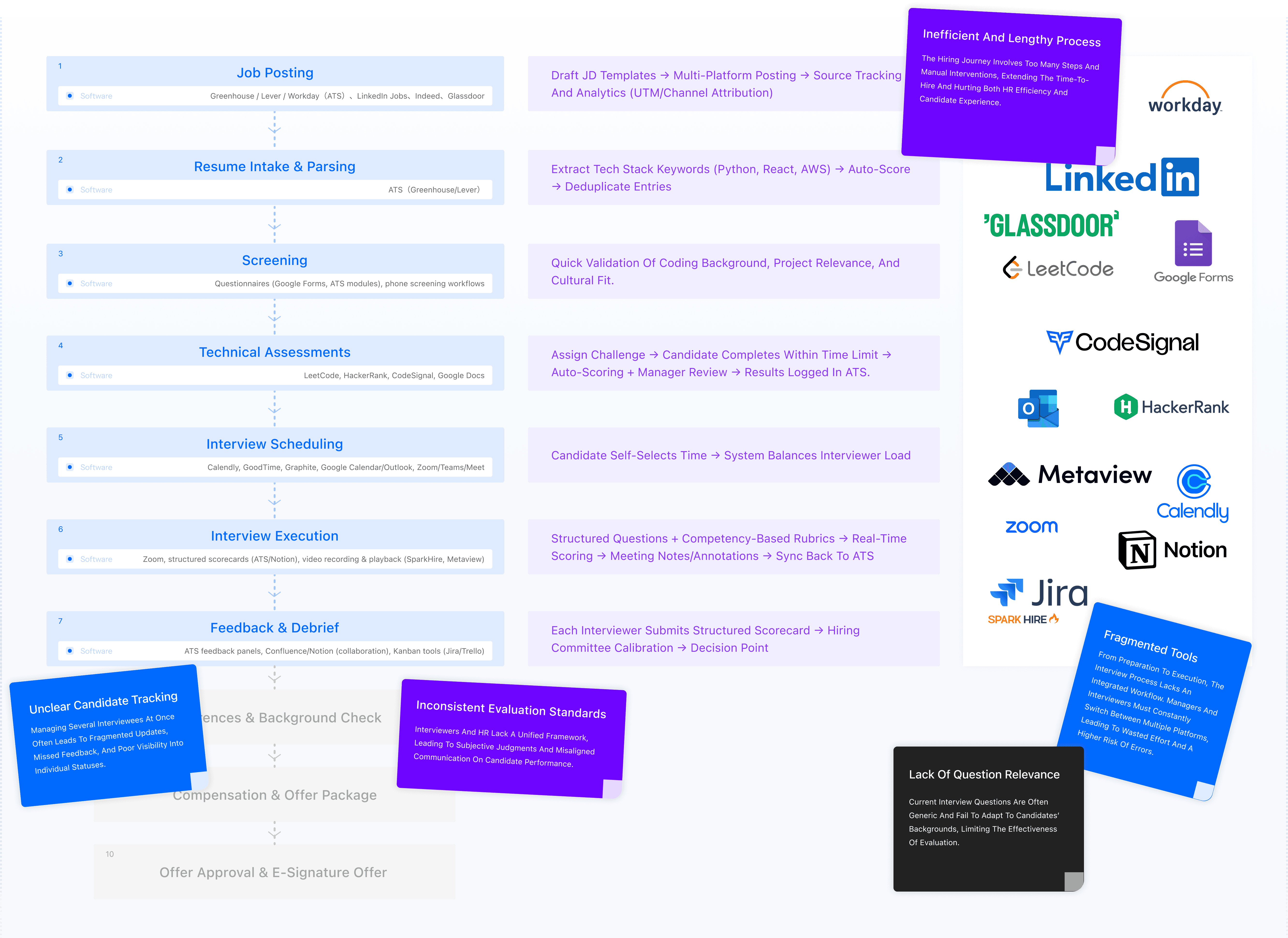
Core Pain Points
01
Lengthy and Inefficient Process
Too many disconnected steps slow down the hiring cycle and hurt both HR efficiency and candidate experience.
Low Efficiency
Workflow Fragmentation
02
Lack of Customization in Questions
Question sets are overly skill-based, leaving little room for customization that highlights individual candidate strengths and stories.
Skill-only Focus
Low Personalization
03
Difficult Candidate Tracking
Managing multiple candidates in parallel without centralized tracking leads to fragmented updates, missed feedback, and poor decision-making efficiency.
Tracking Overload
Fragmented Updates
Design principles
We defined four core design principle to help me and my product team to design, evaluate and critique the UX details.
Efficiency
Resolve chats fast—cut duplicate clicks and distractions.
Consistency
Keep interactions and visuals uniform—reduce cognitive load and build user trust.
Easy - to - learn
Make every action obvious; less training require.
Accessibility
Ensure everyone can use the product—support diverse abilities and contexts.
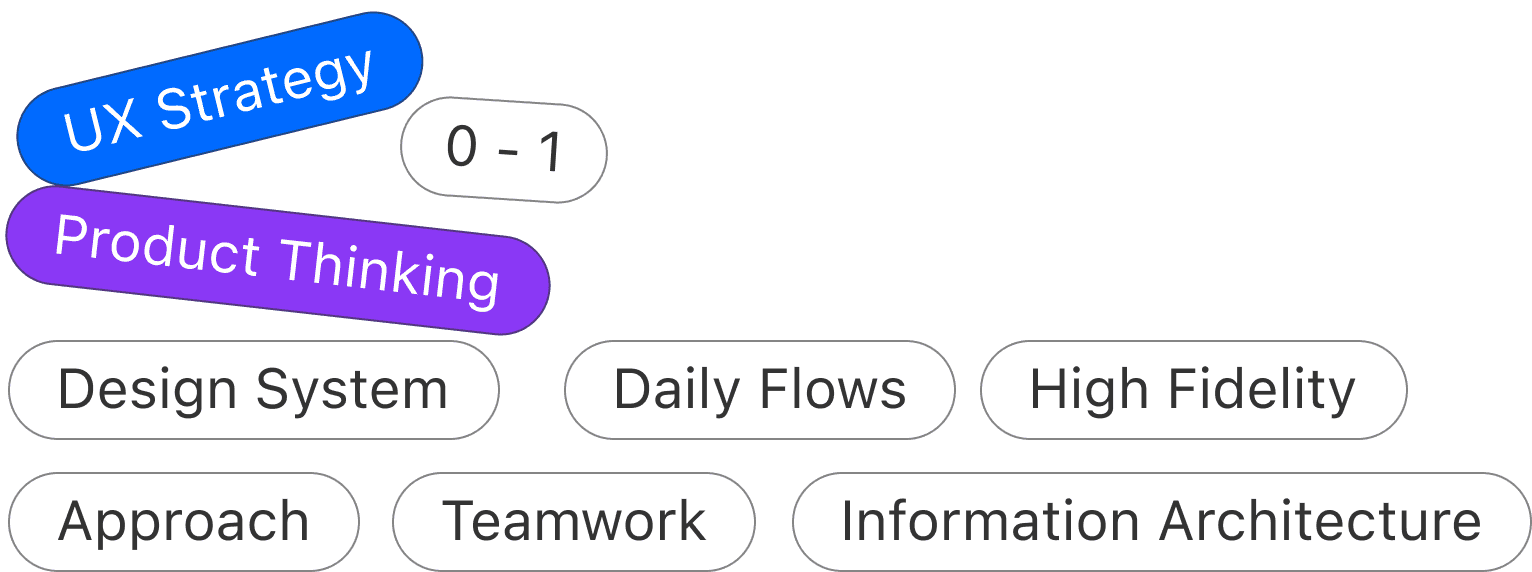
I led the design strategy end-to-end—aligning with PMs, developers, and marketing while balancing product value, scalability, and feasibility. I delivered flows, information architecture, high-fidelity designs, and a scalable design system.
So how I answer the questions and address the above challenges?
/ Strategy 01
Drive scalability → Use product thinking to design for sustainable growth
Vision
Set a long-term vision
Defined product goals and value propositions that expand beyond initial use cases.
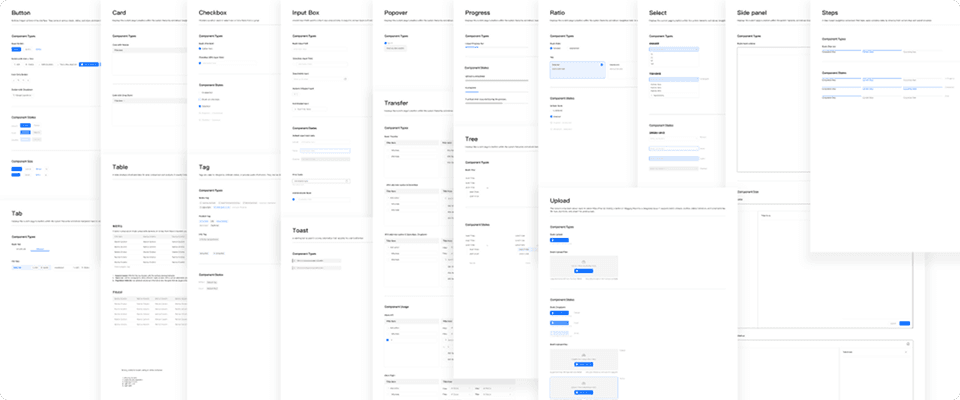
Modular Design
Design for reuse
built modular workflows, reusable components, and a scalable design system to support cross-team and cross-platform growth.
outcome
Design system
Balance
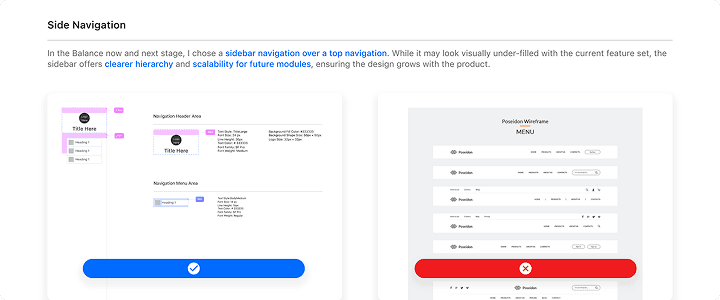
Balance now and next
ensured immediate usability while planning for future evolution aligned with roadmap.
Example
Navigation selection
Validation
Prove scalability
validated approach with iterative prototyping and cross-scenario testing.
Scalable Growth
I applied product thinking to shift the design focus from short-term fixes to scalable systems, building modular components and reusable workflows that ensured today’s usability while laying the foundation for future growth.
/ Strategy 02
Optimize for efficiency → Minimize complexity to deliver MVP fast
Prioritized core features
Ranked pages and functions by value & impact.
High
Low
AI-Powered Mock Interviews
Connection Check (camera + mic test)
Timer & Progress Tracker
Control Buttons (stop, continue, skip)
Interview Timeline
Hint System
Recording Upload & Analysis Popup
Interview End Page (summary + feedback)
Camera & Microphone Controls
Loading/Transition States
Dashboard – Partner/Institution View
Secure Authentication (for each partner)
Custom Branding (logo, name, feature set by package)
Student Management Table (overview of all students)
Filters & Sorting (by performance, activity, etc.)
Add/Edit Students (with CV upload + data inputs)
Interview Status Overview
Reports Access (recordings, transcripts, AI-generated reports)
Report Editing (customize before sharing)
Send Reports to Student Email
Interview Management (within Dashboard)
View Past Interviews
Create New Interview (via template or AI-generated)
Job Description-Based Interview Setup
Past Experience Integration (candidate CV parsing)
Question Bank Integration (add/replace questions)
Custom Interview Templates (form + preview)
Interviewee Invitation (send directly to candidate)
Performance Feedback System
Performance Metrics Dashboard
Emotional & Behavioral Analysis (tone, pacing, confidence)
Cheat/Bias Detection (e.g., eyeball tracking, multiple devices)
Advanced Analytics & Engagement
Cohort-Level Analytics (for institutions)
Longitudinal Performance Tracking
Gamification (progress badges, milestones)
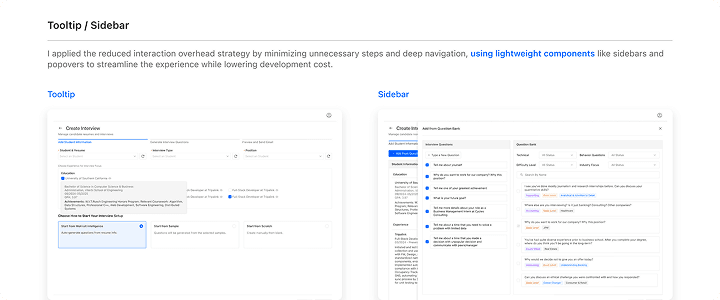
Reduced interaction overhead
minimized page transitions and flows.
Example
· Tooltip / sidebar
Click to View
Measured time & manpower constraints to fit a 1-month timeline.
We accelerated delivery by reusing existing components and templates, while building rapid feedback loops through early stakeholder and user testing to ensure alignment and usability.
/ Strategy 03
Bridge roles → Balance requirements to co-create feasible solutions
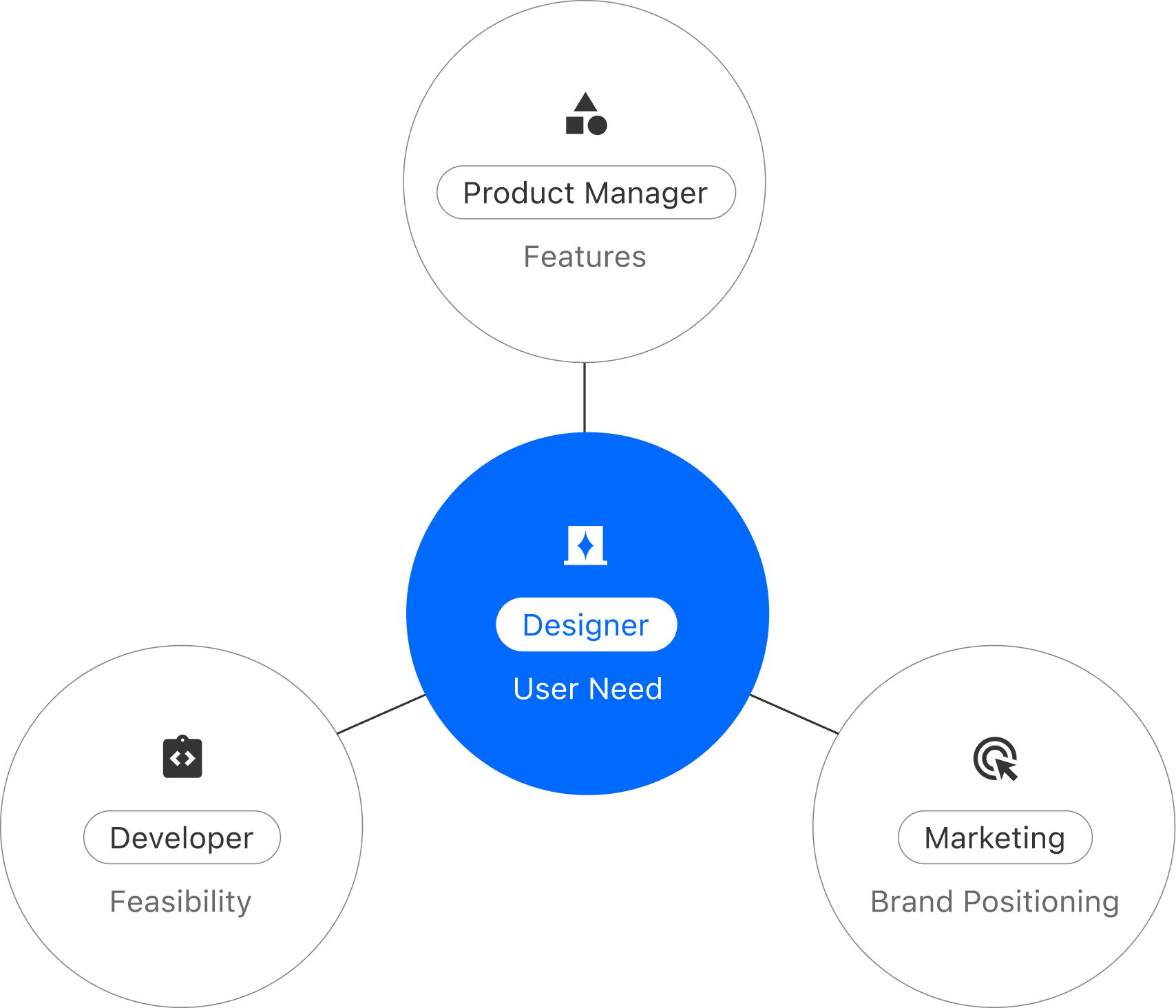
Translate needs into design
Convert PM’s feature requirements, marketing’s brand positioning, and developers’ feasibility constraints into actionable design solutions.
Balance trade-offs
Make trade-offs between features, user experience, and technical cost to drive optimal outcomes.
Pitch and advocate
Communicate design value to different stakeholders and advocate for better user experiences.
Facilitate collaboration
Align cross-functional perspectives, build a shared language, and unify goals.
Ensure user-centricity
Keep user needs at the center amid business and technical negotiations.
Development
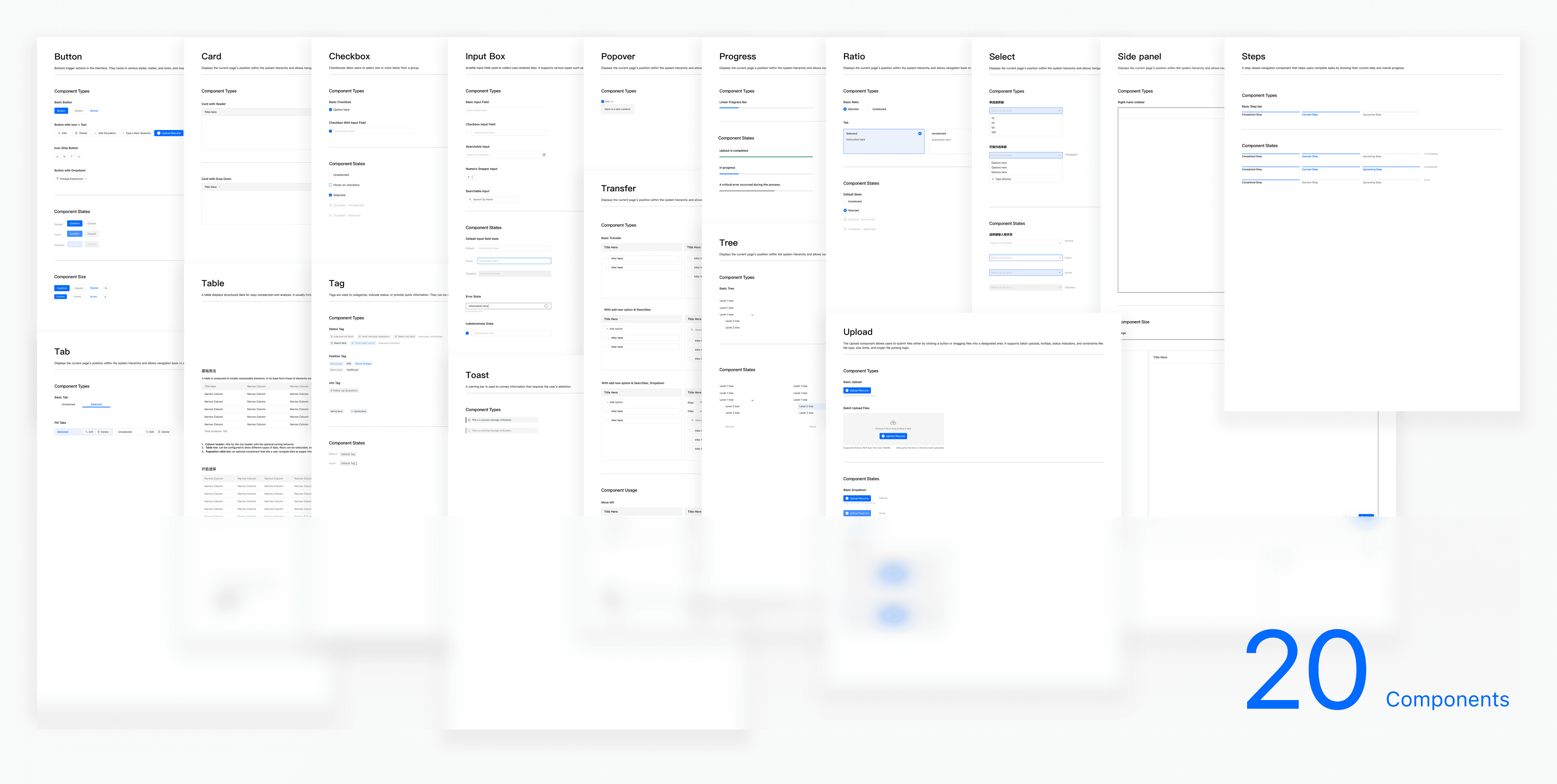
Design System
Daily Flow of core users
Information Architecture
High - Fidelity Design
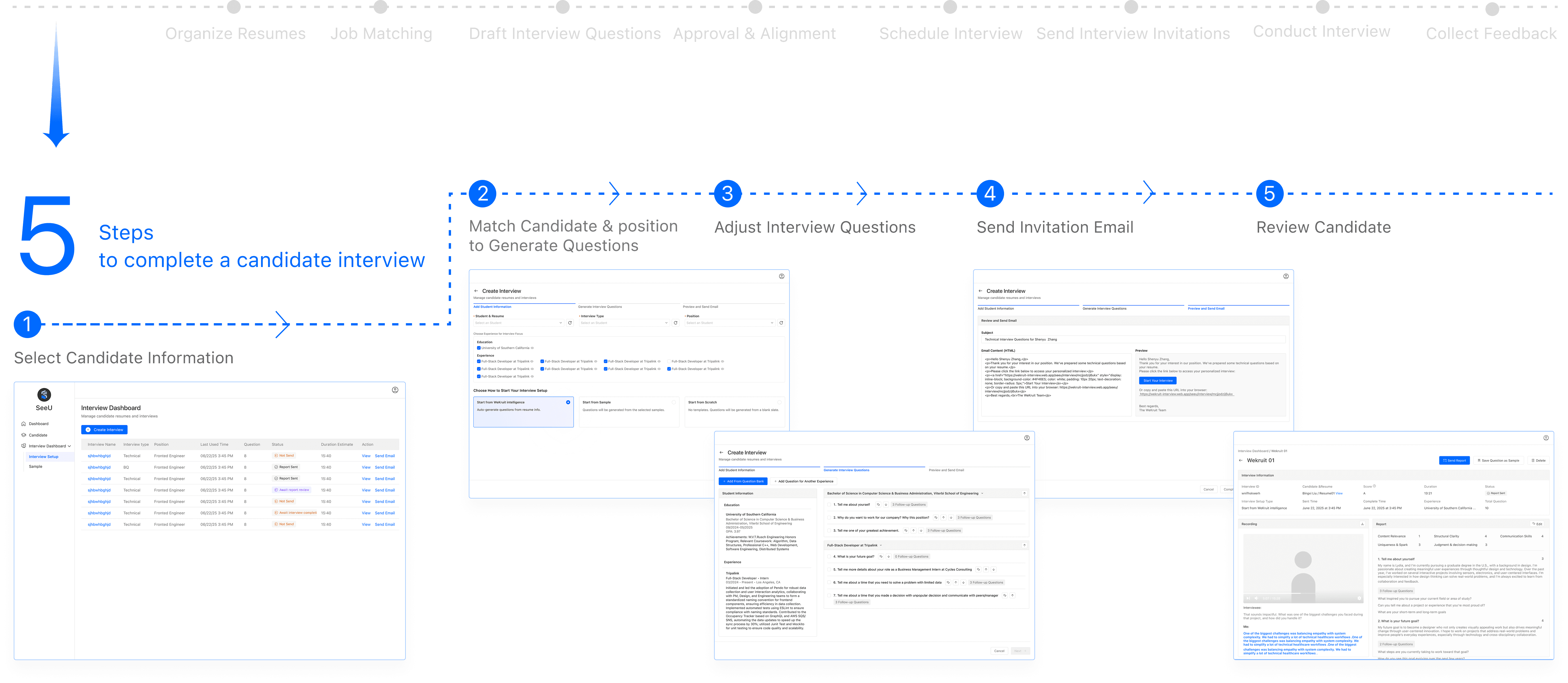
Streamline the recruitment journey
Steps
to complete a candidate interview
Smarter candidate matching
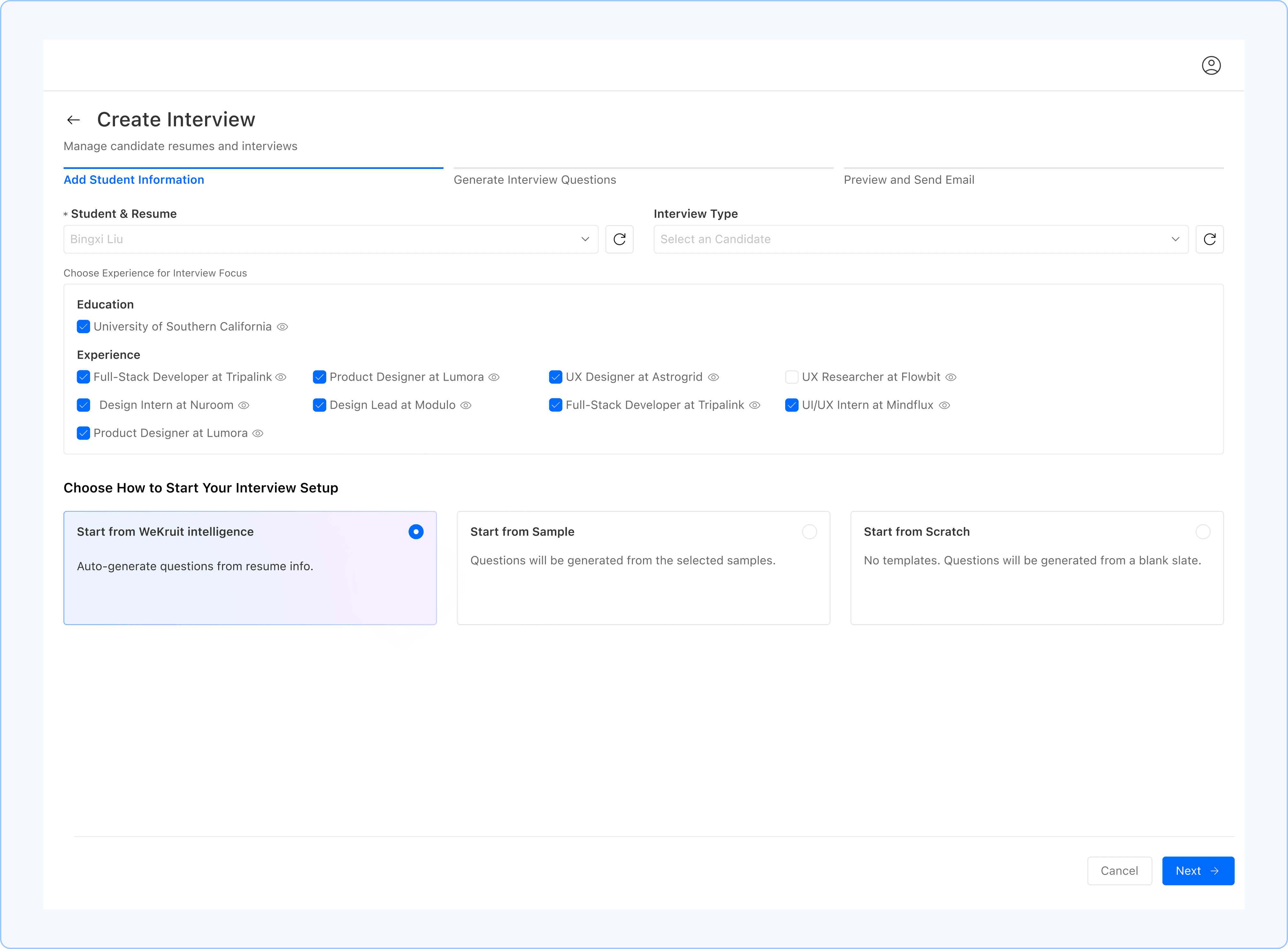
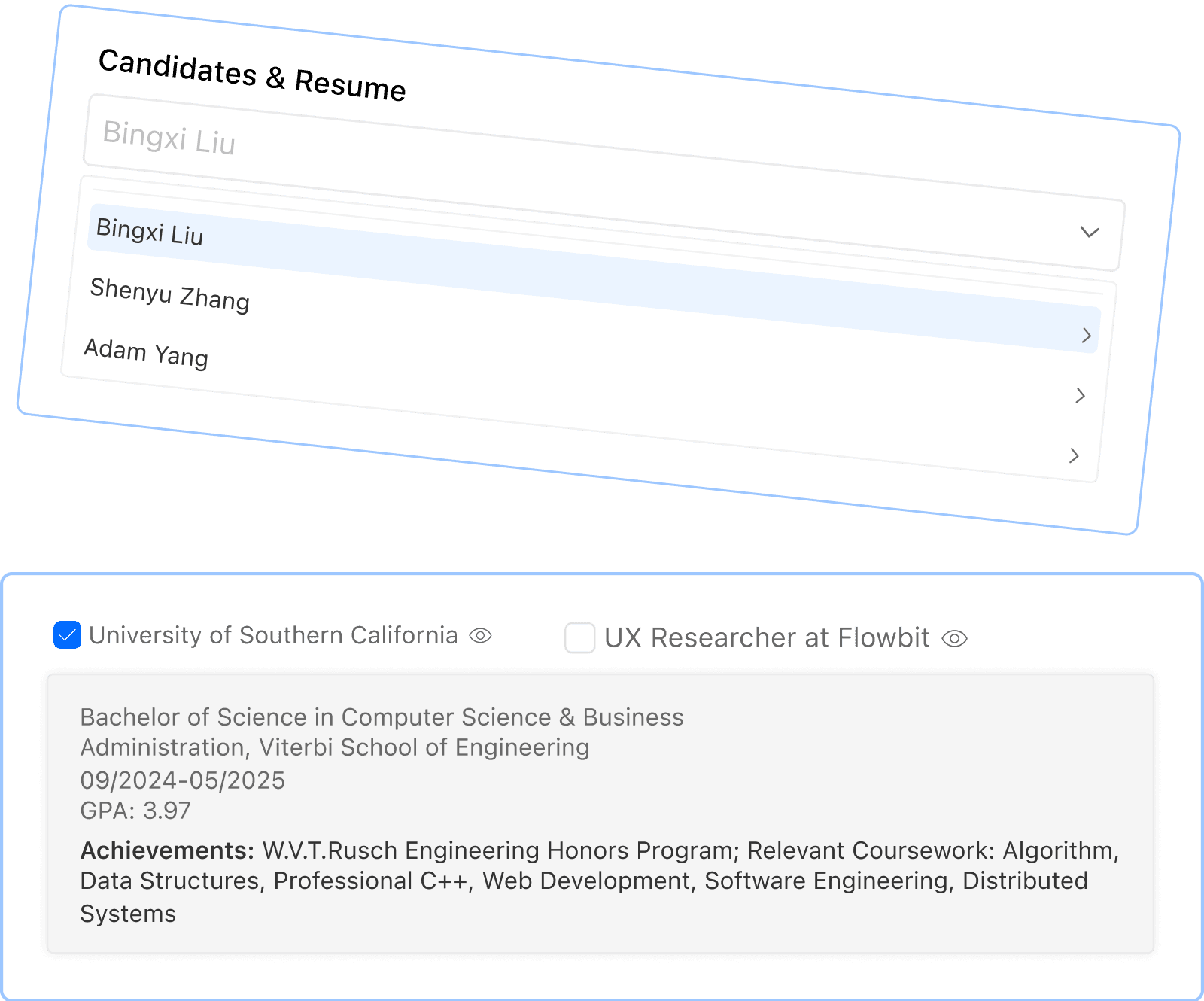
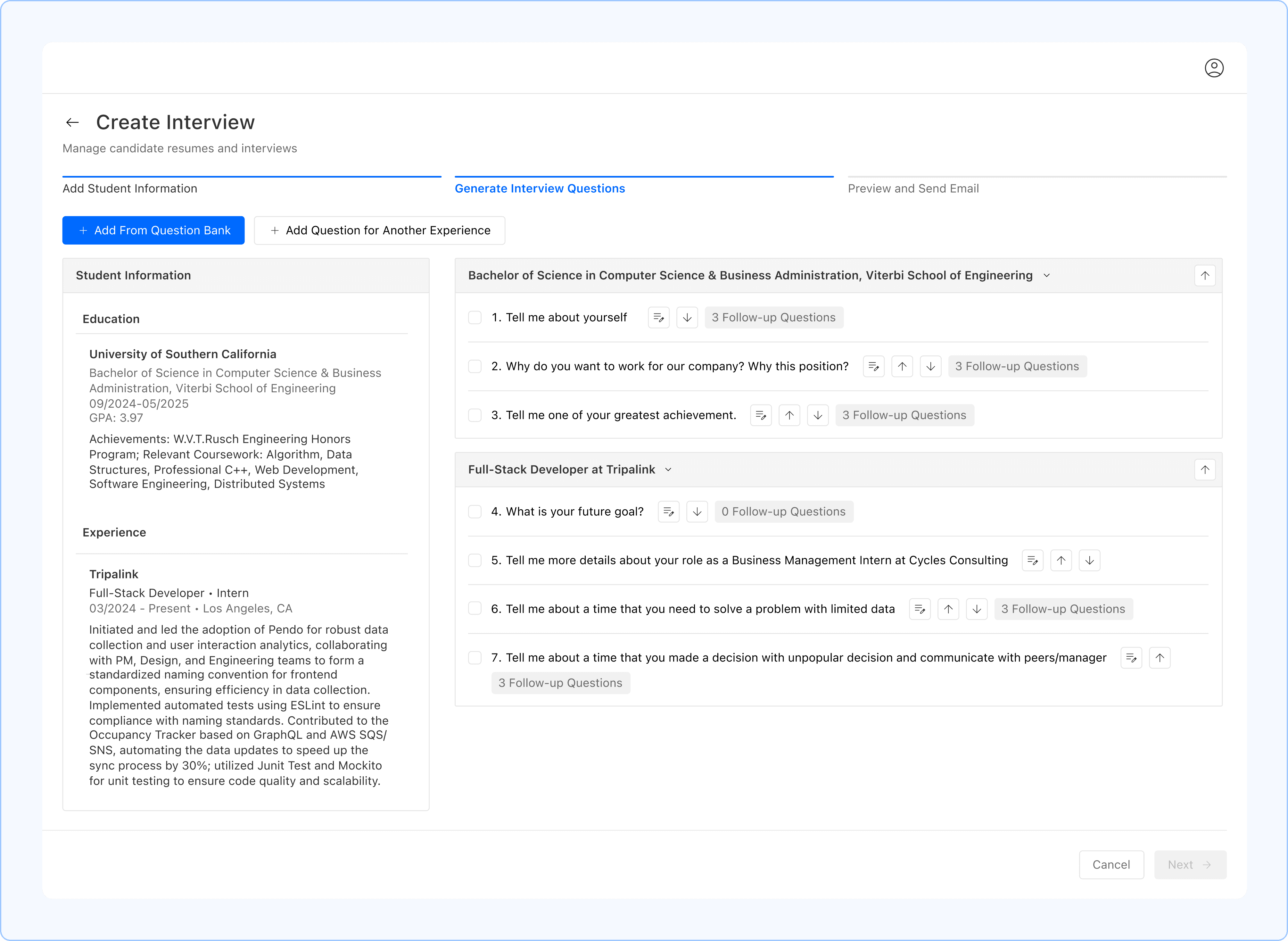
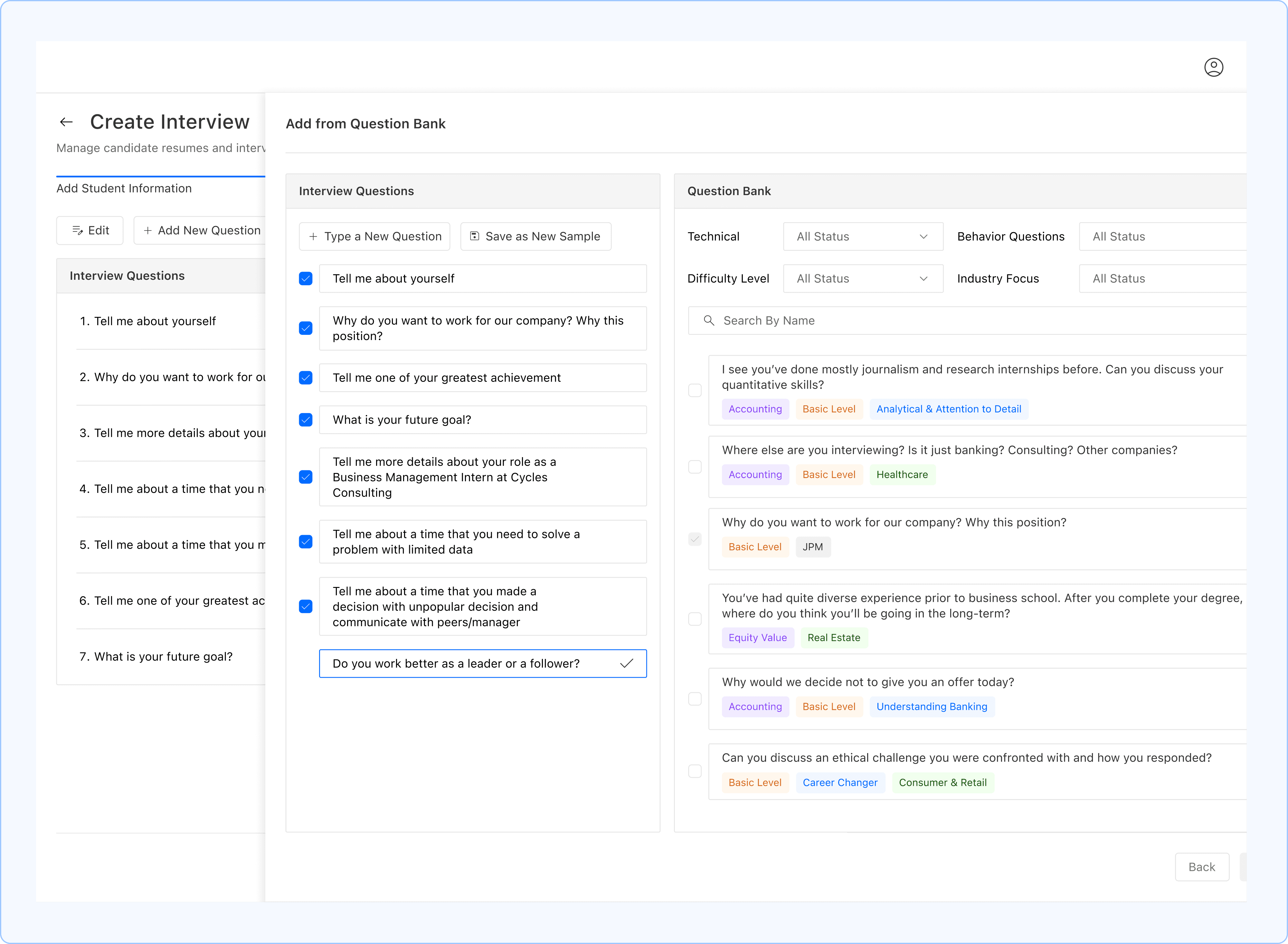
Filter questions across multiple dimensions from the bank to generate the most relevant ones based on each student’s resume.
Clearer Application Visibility
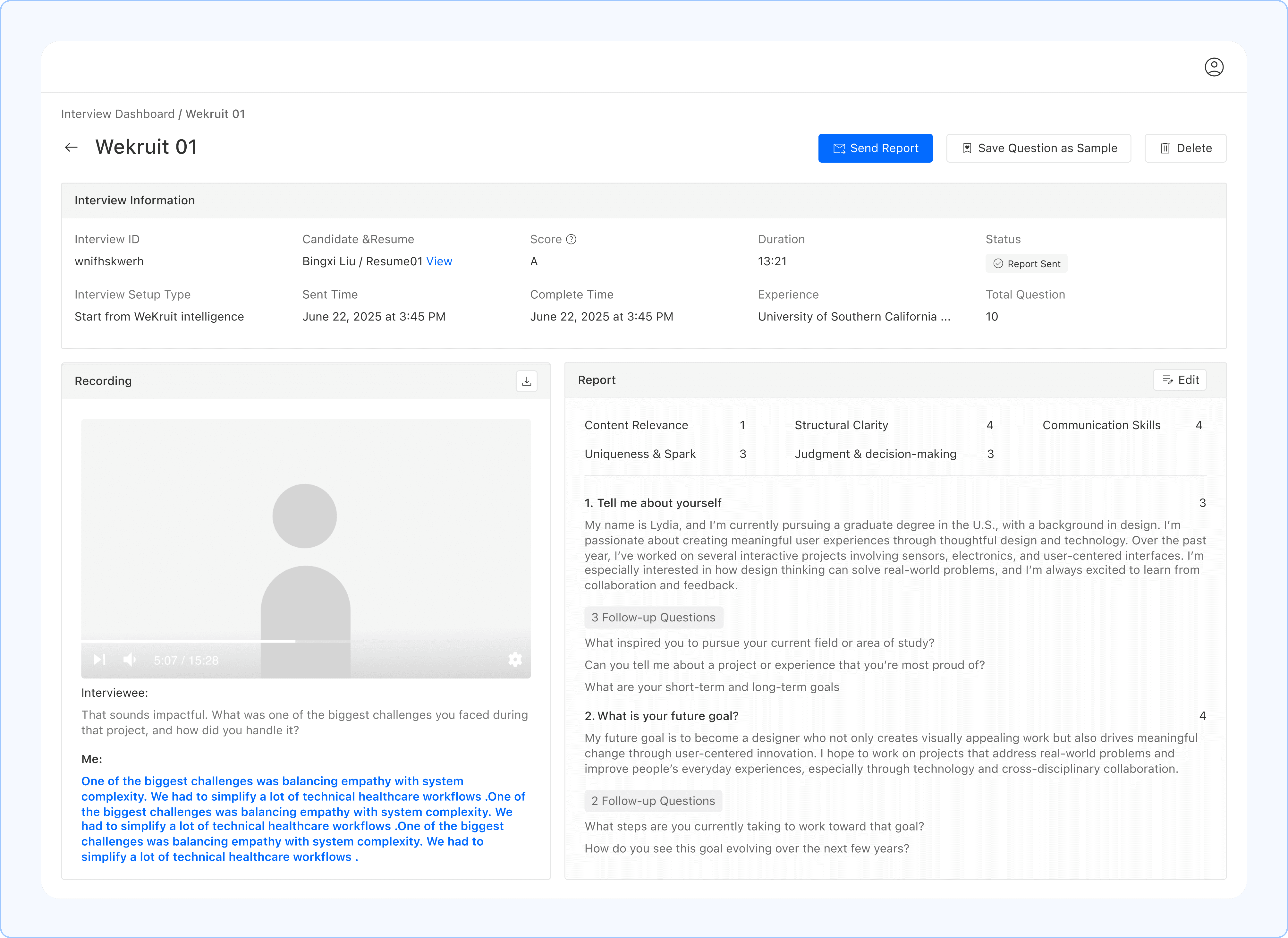
Standardized Evaluation
Select candidate experiences first to generate interview questions with greater accuracy and relevance
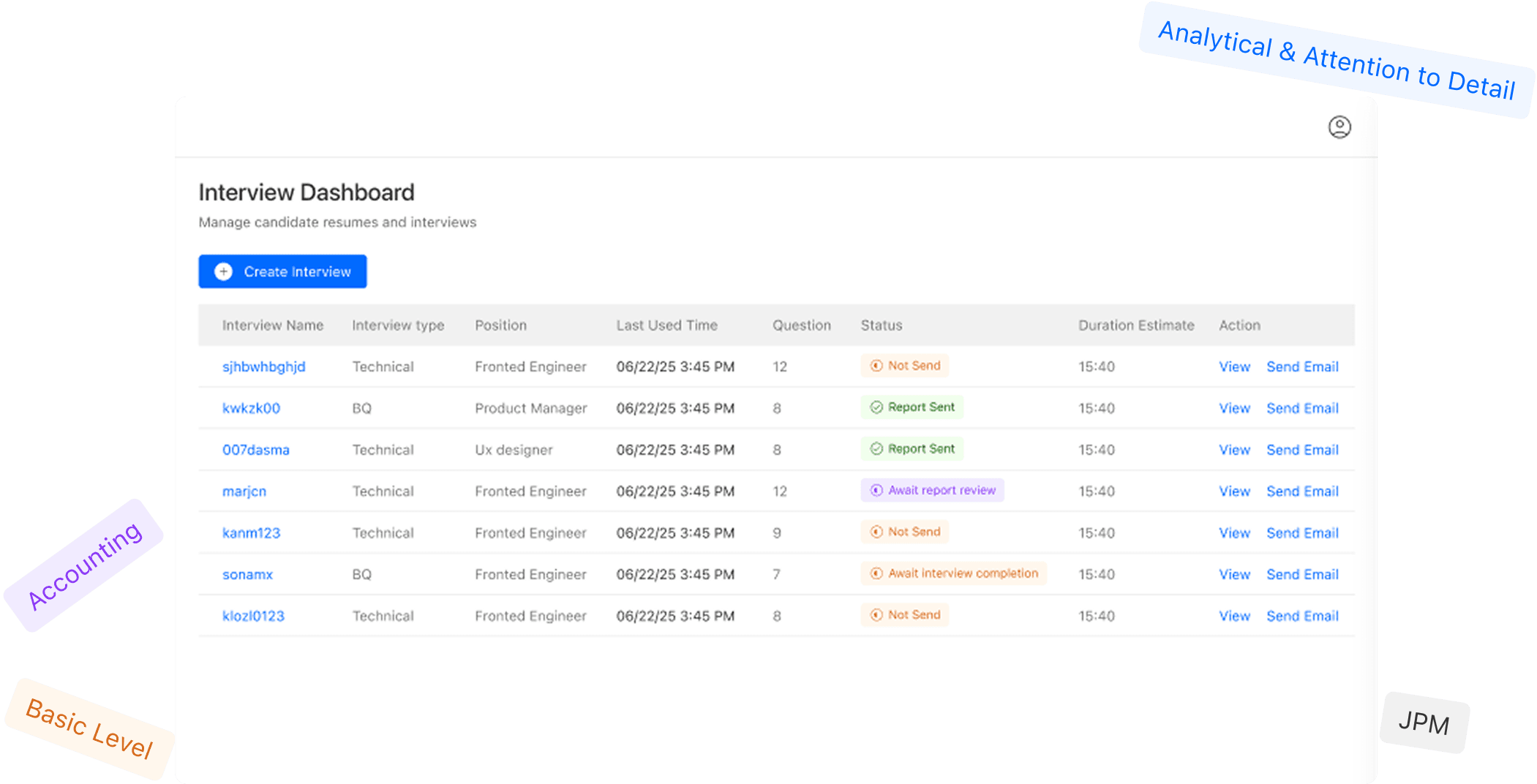
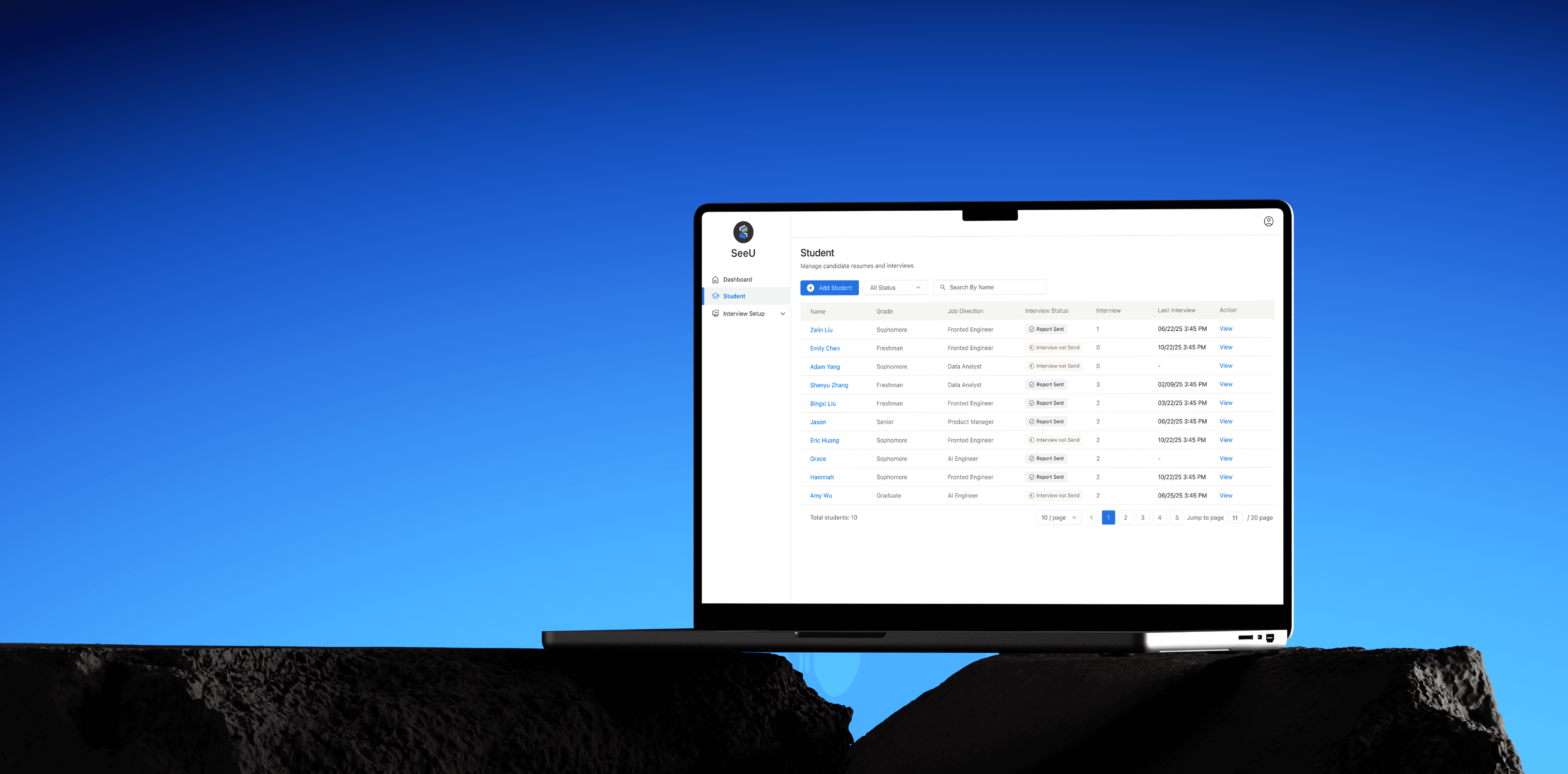
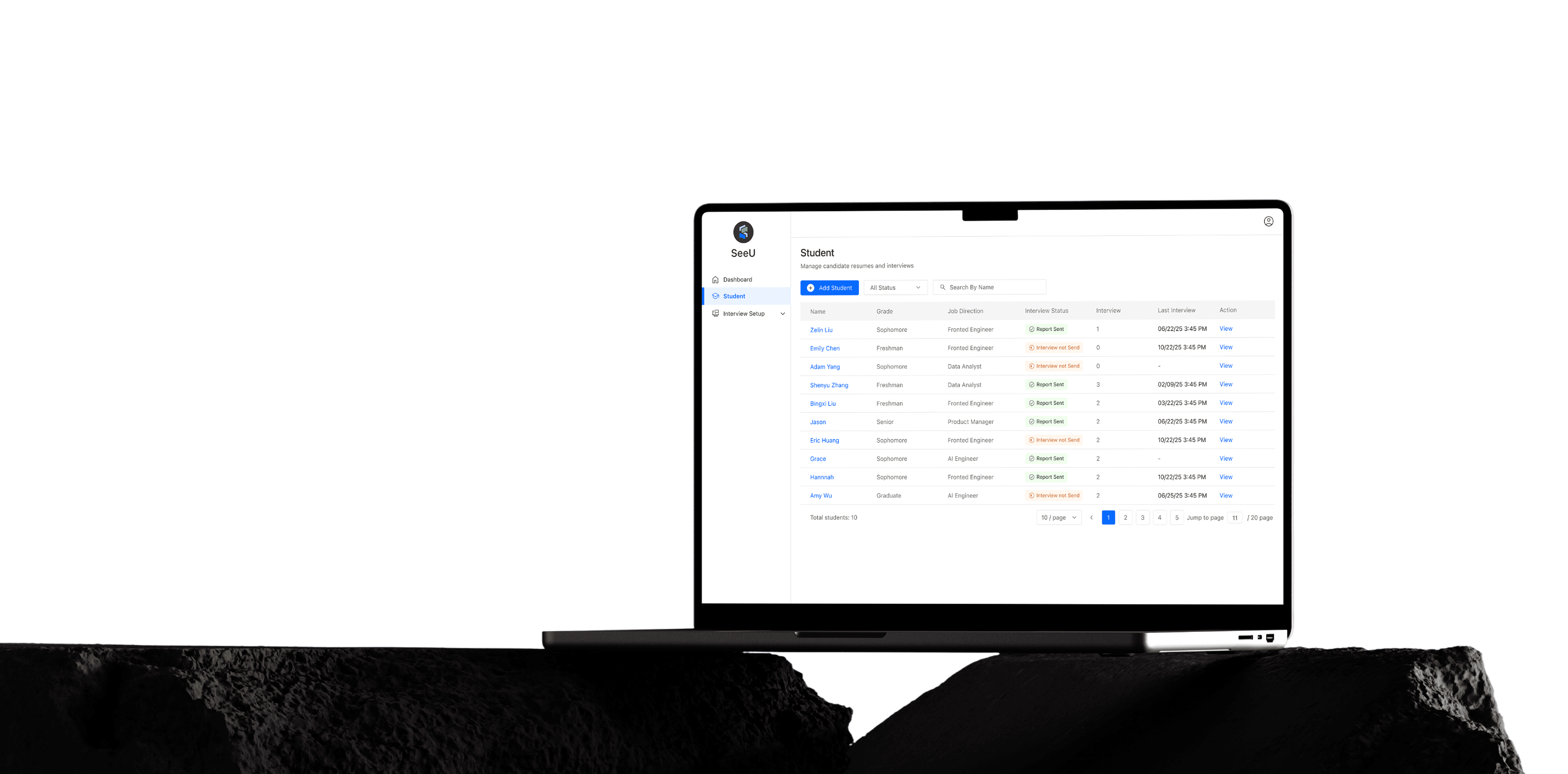
Manage candidates
in one view.

Design Files
Iterations
Response questionnaire
(up to Sep)
Usability Satisfaction
